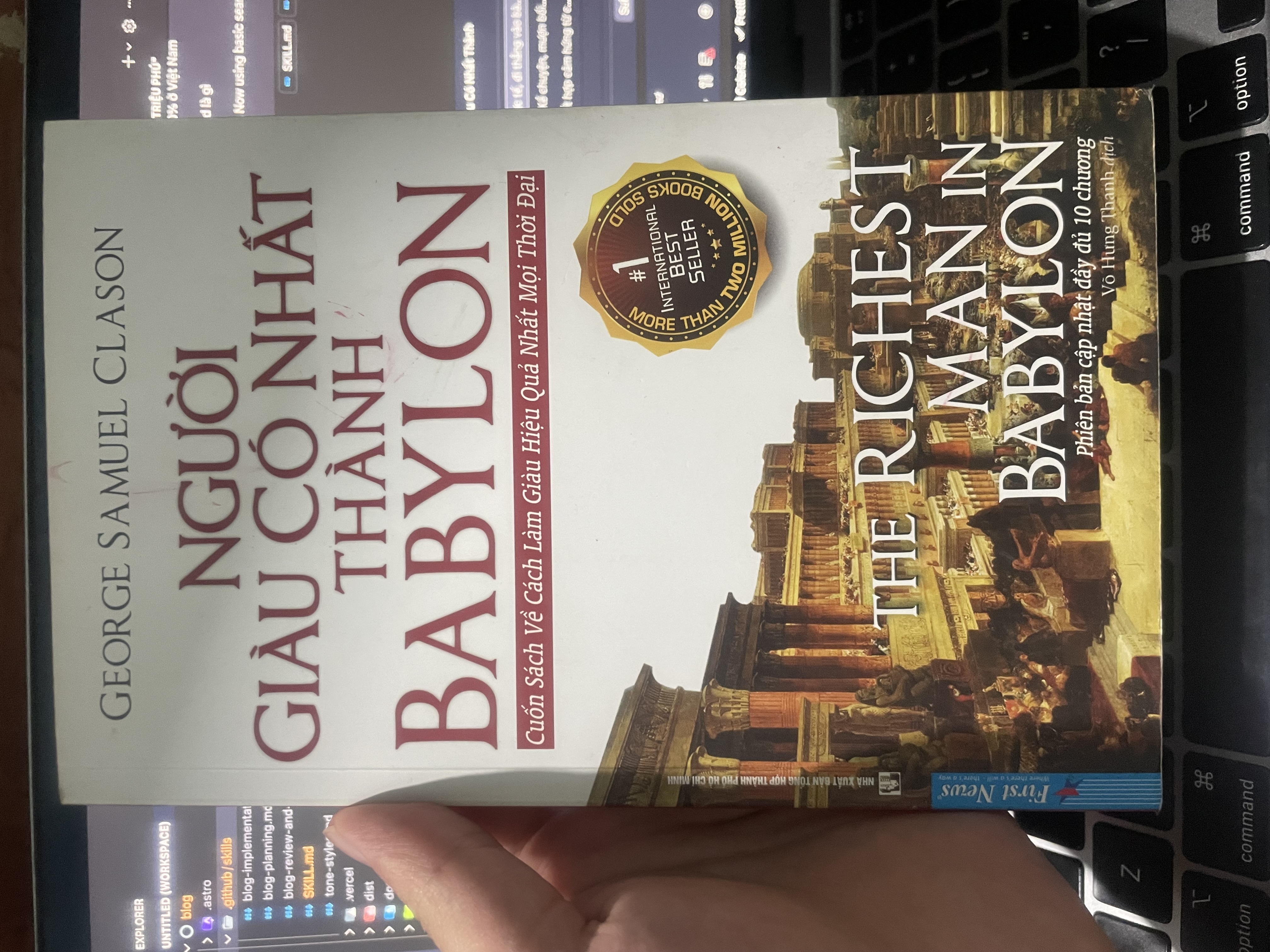
The Richest Man in Babylon
George S. Clason
"Probably the best 'intro' to finance ever written. The ancient wisdom of Babylon remains strikingly accurate in the digital age."
If Currency Wars makes me skeptical of the macro financial system, The Richest Man in Babylon brings me back to earth with extremely basic yet profound money management principles.
Unlike dry economic textbooks, George S. Clason borrows the backdrop of the glorious ancient city of Babylon to tell parables. Through the teachings of Arkad – the richest man in Babylon – I realized that the laws of money have essentially remained unchanged for thousands of years.
Core Principles: The 7 Cures for a Lean Purse
The biggest lesson Arkad teaches isn’t how to earn a lot of money, but how to keep it. He likens a purse to a tree that needs regular watering:
- Start thy purse to fattening: Always set aside at least 1/10 of all you earn to keep for yourself before spending on anything else.
- Control thy expenditures: Clearly distinguish between “necessary expenses” and “passing desires.”
- Make thy gold multiply: Money sitting still is dead money. Learn to invest so “money makes money.”
- Guard thy treasures: Only invest in fields you understand or with advice from reputable experts. Avoid get-rich-quick schemes.
Applying Ancient Wisdom to Modern Life
Reading this, I found the Babylonian principles perfectly applicable today with modern tools:
- Automate your 10%: Instead of hiding gold in a clay pot, I use my banking app’s “Auto-save” feature. When salary comes in, the system automatically cuts 10% into a term deposit or investment account. Out of sight, out of mind.
- A practical example: With a salary of 10 million VND/month:
- 1 million (10%): Immediately transfer to savings/investment fund. Do not touch.
- Remaining 9 million: Split for living expenses, rent, entertainment. If it’s not enough? Find ways to cut expenses, never dip into that 10%.
- Invest for growth: That accumulated amount can go into savings (safe but low yield) or buy index funds (ETFs), blue-chip stocks to leverage long-term compound interest.
Strengths and Limitations
- Strengths: The parable storytelling style is extremely readable and memorable. financial beginners can understand it immediately. It is highly inspiring regarding discipline.
- Limitations: Written in 1926 with an ancient setting, some examples (like lending gold, buying slaves for labor) feel a bit distant. Those with deep investment knowledge might find the book a bit “elementary.”
Conclusion: A thin book you can finish quickly, but its value lasts a lifetime. It builds the most solid foundation for your financial house: Discipline.